START REACTION TEST
Sprint Start Reaction Time Test
Measure the time from the gun to your first movement with your camera. Review your start video too.
Under 0.100 s is shown as a false-start reference.
* For training reference only.
START REACTION TEST
Measure the time from the gun to your first movement with your camera. Review your start video too.
Under 0.100 s is shown as a false-start reference.
* For training reference only.
Reaction time is how long it takes your body to begin moving after a signal. This page uses your phone camera to measure the time from the starting gun to your first start movement.
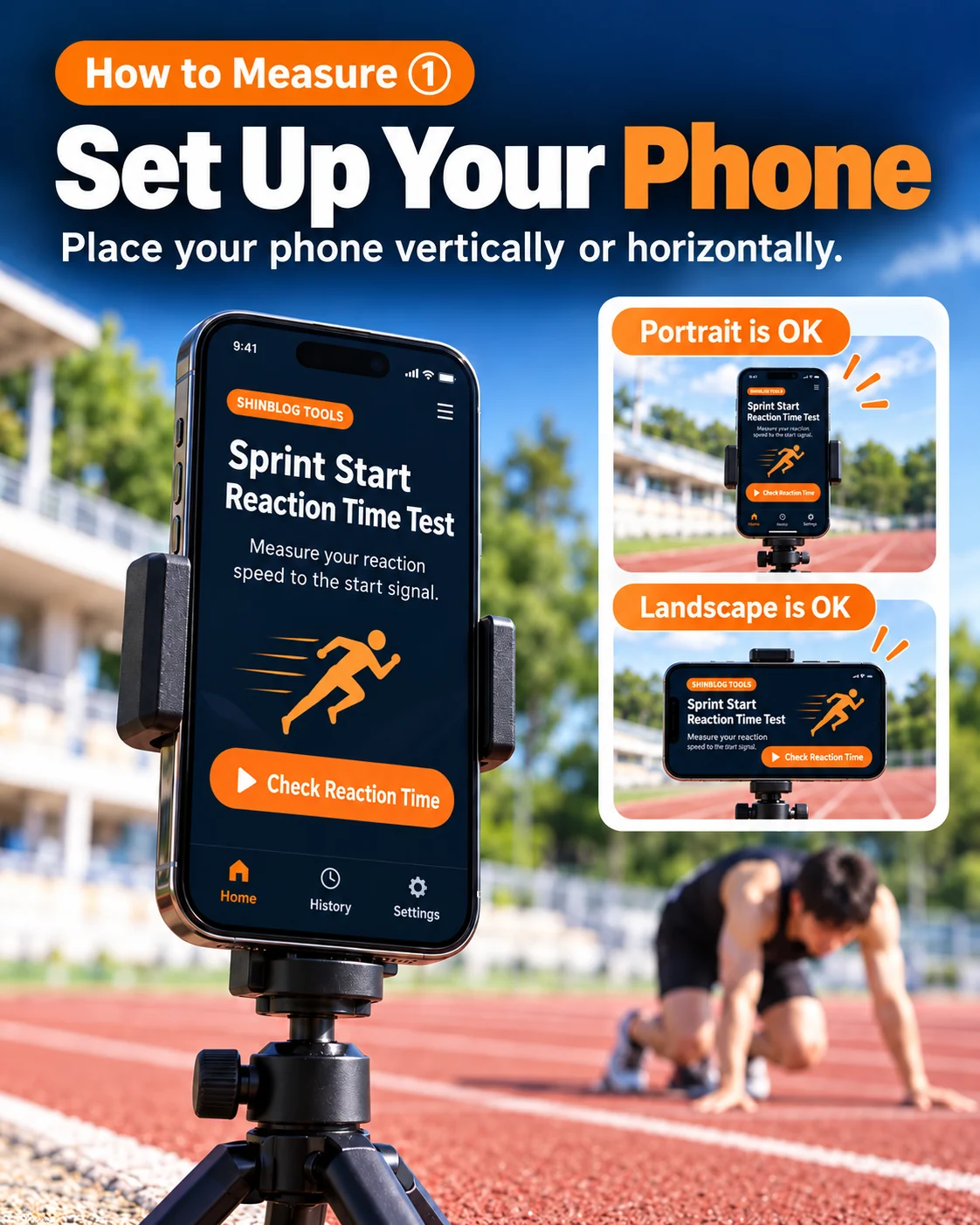
Place your phone in portrait or landscape orientation.
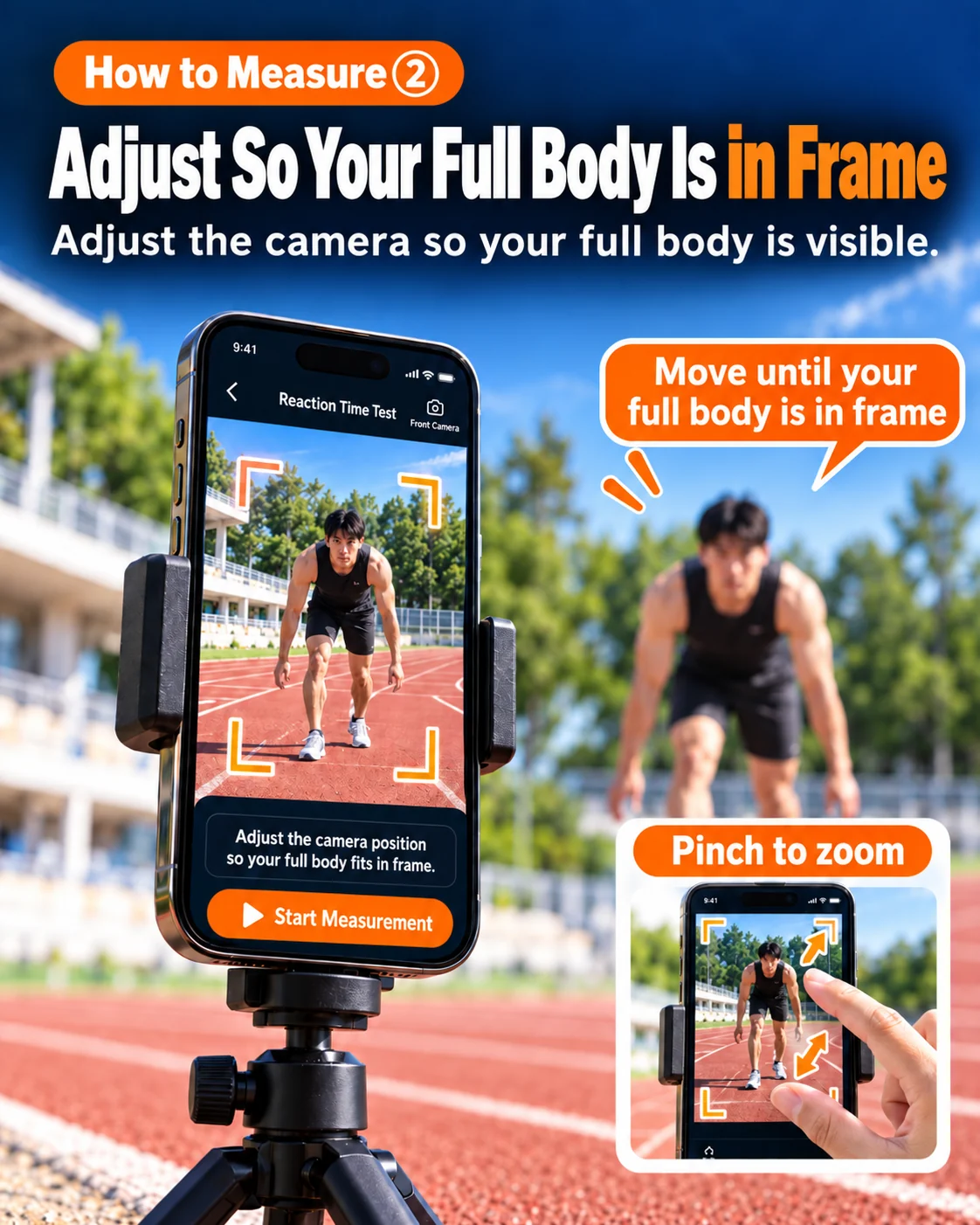
Adjust the camera so your full body is in frame.
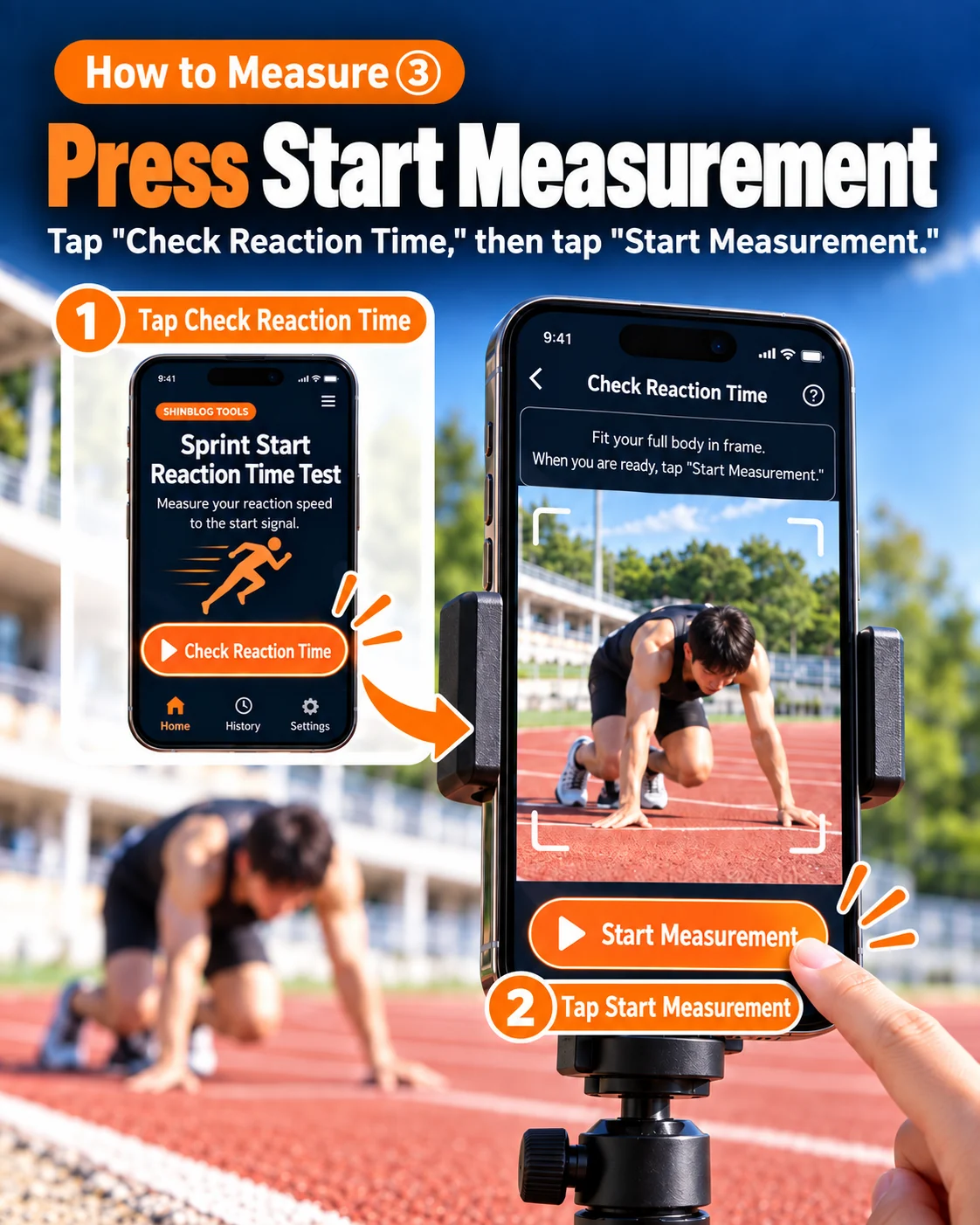
Tap “Check Reaction Time,” then tap “Start Measurement.”
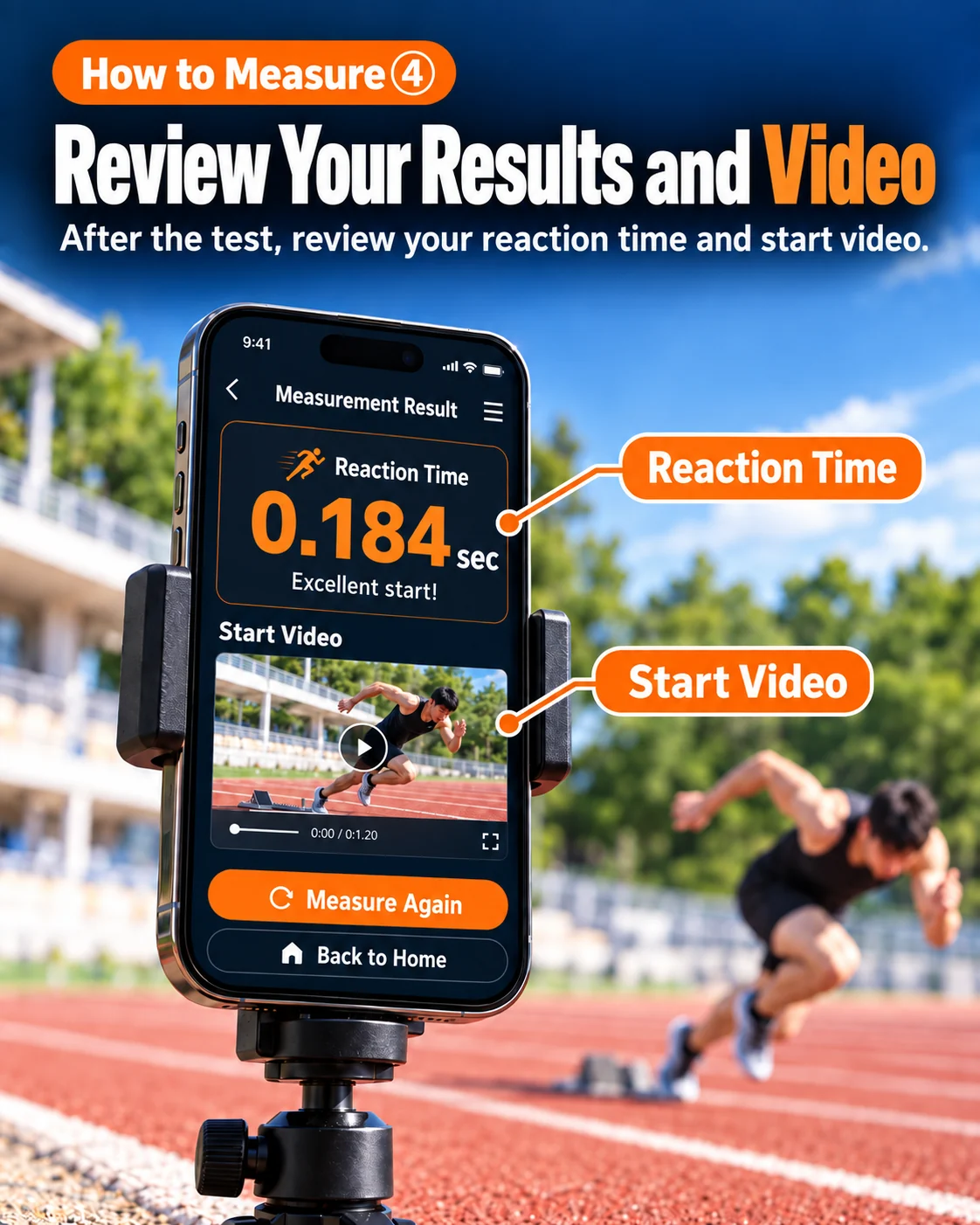
After the test, review your reaction time and start video.
Reaction time varies depending on how it is measured. As a rough guide, one simple-reaction study found averages of about 0.27 seconds for non-athletes and 0.24 seconds for athletes. At the World Championships, average 100 m start reaction times were about 0.17 seconds for men and 0.18 seconds for women.
* These figures use different measurement methods, so treat them as general benchmarks. Simple reaction study · 100 m World Championships study
In track and field, a reaction time under 0.100 seconds is treated as a false start threshold. This tool also displays “FALSE START” when it detects a reaction under 0.100 seconds. Because the measurement uses a phone camera, it cannot be used for official competition decisions.
Along with your reaction time, the tool records a short start video from about 1 second before the gun to 3 seconds after it. Use the video to review your set position, first step, and how quickly your upper body rises.
Fit your full body in frame. Pinch with two fingers to zoom.
HISTORY
REACTION TIME
--
Records about 1 second before GO to 3 seconds after.